
ASTRO 2026 Annual Meeting — Boston, Sep 26-30

Selected for ASTRO 2026 BEST of Physics — Oral Presentation in Boston

Thrilled to share that our work has been selected for an Oral Scientific Presentation in the BEST of Physics session at the American Society for Radiation Oncology (ASTRO) 2026 Annual Meeting, September 26–30 in Boston, MA. Out of ~2,700 abstracts submitted to ASTRO this year, only 300 were chosen for oral presentation, and BEST of Physics gathers the highest-rated physics work of the meeting. Presentation details Abstract # 75557 Title Early Adaptive Interventions in Lung Cancer: Leveraging Fusion of Longitudinal CBCT Trajectories and Clinical Variables for Robust Survival Prediction Session SS 19 — BEST of Physics Date / Time September 28, 2026 · 10:45 AM – 12:00 PM ET Venue Thomas M. Menino Convention & Exhibition Center, Boston, MA Format 7-min oral + 3-min Q&A Publication Red Journal supplement Authors Wookjin Choi, Pradeep Bhetwal, Michael Dichmann, Yingcui Jia, Wenchao Cao, Danfu Liang, Yingxuan Chen, Adam Dicker, Yevgeniy Vinogradskiy ...
May 18, 2026 · 3 min · 491 words · Wookjin Choi

qradiomics — Radiomics Research CLI

License: MIT · Python: 3.11+ · Repo: choilab-jefferson/qradiomics Radiomics research CLI. qr does two things equally well: Atomic tasks — convert DICOM, extract features, merge clinical, fit a model. Each is a single command, files in / files out. Workflow assembly — generate, mutate, scaffold, and run multi-step pipelines from those atomic tasks. Default executor is Nextflow (per-patient parallel + cache + HPC); Prefect is the secondary executor; inline is the small-cohort fallback. The canonical radiomics data flow has four stages — data → image → features → modeling — and one qr workflow plan call instantiates the whole chain: ...

May 17, 2026 · 9 min · 1784 words · Wookjin Choi

The Nexus featured our cardiac PET radiomics study

Jefferson Investigates: Artificial Intelligence and Heart Disease — The Nexus https://medicalxpress.com/news/2024-06-machine-lung-cancer-scans-heart.html

June 27, 2024 · 1 min · 11 words · Wookjin Choi

Shining a Light: Unveiling Cardiac Risks Using PET Imaging in Lung Cancer Radiotherapy

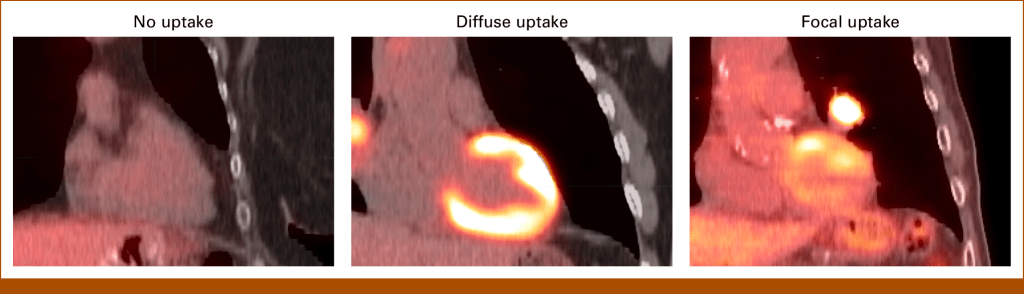
Our study on cardiac toxicity in lung cancer treatment is now featured in a JCO CCI editorial. Discoveries that could change patient care are on the horizon. Stay tuned! #CardiacToxicity#LungCancer#Innovation Shining a Light: Unveiling Cardiac Risks Using Positron Emission Tomography Imaging in Lung Cancer Radiotherapy

April 14, 2024 · 1 min · 45 words · Wookjin Choi

Exploring published and novel pre-treatment CT and PET radiomics to stratify risk of progression among early-stage non-small cell lung cancer patients treated with stereotactic radiation

Maria Thor 1,4, Kelly Fitzgerald 2,4, Aditya Apte 1, Jung Hun Oh 1, Aditi Iyer 1, Otasowie Odiase 2, Saad Nadeem 1, Ellen D. Yorke 1, Jamie Chaft 3, Abraham J. Wu 2, Michael Offin 3, Charles B Simone II 2, Isabel Preeshagul 3, Daphna Y. Gelblum 2, Daniel Gomez 2, Joseph O. Deasy 1, Andreas Rimner 2 1Department of Medical Physics, Memorial Sloan Kettering Cancer Center 2Department of Radiation Oncology, Memorial Sloan Kettering Cancer Center 3Department of Medicine, Memorial Sloan Kettering Cancer Center ...

November 7, 2023 · 2 min · 271 words · Wookjin Choi

Novel Functional Radiomics for Predicting Cardiotoxicity in Lung Cancer Radiotherapy using Cardiac FDG-PET Uptake

Our paper “Novel Functional Radiomics for Prediction of Cardiac Positron Emission Tomography Avidity in Lung Cancer Radiotherapy” has been published in JCO CCI. This research work delves into an innovative approach to predict clinical cardiac assessment using functional imaging. Abstract: Traditional methods for evaluating cardiotoxicity primarily focus on radiation doses to the heart. However, functional imaging offers the potential to enhance early prediction of cardiotoxicity in lung cancer patients undergoing radiotherapy. In this context, Fluorine-18 (18F) fluorodeoxyglucose (FDG)-positron emission tomography (PET)/computed tomography (CT) imaging plays a crucial role. This study aims to develop a radiomics model that predicts clinical cardiac assessment using 18F-FDG PET/CT scans before thoracic radiation therapy. ...

September 11, 2023 · 2 min · 327 words · Wookjin Choi

2023 Accepted/Invited Annual Meeting abstracts

AAPM Annual Meeting (Houston, TX • July 23 ‒ 27, 2023) Novel Functional Delta-Radiomics for Predicting Overall Survival in Lung Cancer Radiotherapy Using Cardiac FDG-PET Uptake Wookjin Choi, Yevgeniy Vinogradskiy Interactive ePoster Discussions: Sunday, July 23, 2023: 3:00 PM - 3:30 PM, GRBCC, Exhibit Hall | Forum 6 SU-300-IePD-F6-4 Novel Functional Delta-Radiomics for Predicting Overall Survival in Lung Cancer Radiotherapy Using Cardiac FDG-PET Uptake Deep Learning Segmentation for Accurate GTV and OAR Segmentation in MR-Guided Adaptive Radiotherapy for Pancreatic Cancer Patients Wookjin Choi, Hamidreza Nourzadeh, Yingxuan Chen, Christopher G. Ainsley, Vimal K. Desai, Alexander A. Kubli, Yevgeniy Vinogradskiy, Maria Werner-Wasik, Adam Mueller, and Karen E. Mooney PO-GePV-D-50 Deep Learning Segmentation for Accurate GTV and OAR Segmentation in MR-Guided Adaptive Radiotherapy for Pancreatic Cancer Patients ...

May 8, 2023 · 3 min · 488 words · Wookjin Choi

Longitudinal CBCT radiomics in Lung Cancer supported by Varian Medical Systems Inc.

Varian will support my research project entitled “Longitudinal CBCT radiomics analysis for lung cancer radiotherapy response and prognosis prediction” with $230,000 over 2 years. This is the first research grant from Varian to the Department of Radiation Oncology, Sidney Kimmel Medical College at Thomas Jefferson University. This project can potentially impact the clinical practice of lung cancer patients by using standard imaging modalities (CBCT and 4D-CBCT) to provide early prediction of prognosis and toxicity. ...

February 10, 2023 · 2 min · 233 words · Wookjin Choi

Clinically-Interpretable Radiomics

MICCAI'22 Paper | CMPB'21 Paper | CIRDataset This library serves as a one-stop solution for analyzing datasets using clinically-interpretable radiomics (CIR) in cancer imaging (https://github.com/choilab-jefferson/CIR). The primary motivation for this comes from our collaborators in radiology and radiation oncology inquiring about the importance of clinically-reported features in state-of-the-art deep learning malignancy/recurrence/treatment response prediction algorithms. Previous methods have performed such prediction tasks but without robust attribution to any clinically reported/actionable features (see extensive literature on the sensitivity of attribution methods to hyperparameters). This motivated us to curate datasets by annotating clinically-reported features at the voxel/vertex level on public datasets (using our published advanced mathematical algorithms) and relating these to prediction tasks (bypassing the “flaky” attribution schemes). With the release of these comprehensively-annotated datasets, we hope that previous malignancy prediction methods can also validate their explanations and provide clinically-actionable insights. We also provide strong end-to-end baselines for extracting these hard-to-compute clinically-reported features and using these in different prediction tasks. ...

June 29, 2022 · 5 min · 1002 words · Wookjin Choi

Lung Cancer Screening Radiomics

A comprehensive framework for lung cancer screening radiomics using LIDC-IDRI and LUNGx dataset. Data preprocessing - download data, conversion, etc. Radiomics feature extraction including spiculation features AutoML model building and validation Source code https://github.com/choilab-jefferson/LungCancerScreeningRadiomics Publications Wookjin Choi, Jung Hun Oh, Sadegh Riyahi, Chia-Ju Liu, Feng Jiang, Wengen Chen, Charles White, Andreas Rimner, James G. Mechalakos, Joseph O. Deasy, and Wei Lu, “Radiomics analysis of pulmonary nodules in low-dose CT for early detection of lung cancer”, Medical Physics, Vol. 45, No. 4, pp. 1537-1549, April 2018. https://doi.org/10.1002/mp.12820 Wookjin Choi, Saad Nadeem, Sadegh Riyahi, Joseph O. Deasy, Allen Tannenbaum, Wei Lu, “Reproducible and Interpretable Spiculation Quantification for Lung Cancer Screening.” Computer methods and programs in biomedicine. 200 2021. https://doi.org/10.1016/j.cmpb.2020.105839

June 8, 2022 · 1 min · 117 words · Wookjin Choi